The centenary is being celebrated through a programme of events led by the Salford 100 celebrations, which will be honouring the city as a ‘beacon for industry and innovation’, ‘a place for dreamers and creatives’ and spotlighting its ‘special heritage and a bold outlook on the future’.
At the Science and Industry Museum, these themes are at the heart of what we do. We explore ideas that started life in Greater Manchester and went on to change the world, delve deeper into the region’s status as the birthplace of the world’s first industrial city and inspire engineers, innovators and creators of the future.
Discover seven stand-out objects and stories that connect to Salford on our galleries. You can also discover how our museum site is linked to Salford’s transformation from town to city, and how it helped strengthen connections between Salford, Manchester and the wider world, in this blog.
Science Museum Group Collection © The Board of Trustees of the Science Museum
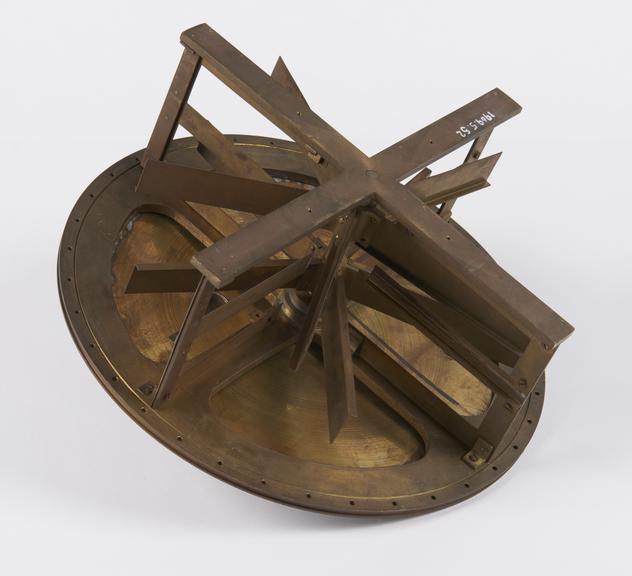
Paddlewheel used by James Joule
Location: Revolution Manchester
Perhaps one of the most well-known names featured in our galleries is James Joule, an amateur scientist who had revolutionary ideas.
Born in Salford in 1818, Joule was the son a brewer who grew up fascinated by science. He was tutored by another Manchester scientist, John Dalton, whose work laid the foundations of modern atomic theory.
Joule’s pioneering work led him to become the first person to prove that heat is a form of energy. Due to his groundbreaking work in thermodynamics, he is now revered as one of the greatest scientists in the history of physics. However, this was not always the case. In his younger years, Joule struggled to be taken seriously by the scientific establishment, and many didn’t believe his theories could be true, claiming his experiments were inaccurate.
But Joule had two secret weapons. His background in brewing helped him measure temperatures very precisely, and he had custom equipment created for all his experiments. Examples of these are on display in the museum, including a calorimeter that he used in his early experiments investigating heat and energy. There is also a paddlewheel used by Joule to calculate force.
Joule is now seen as one of the greatest scientists in the history of physics, proving his critics wrong and paving the way for thermodynamics, a whole new branch of science. He even had a unit of energy, a joule, named after him—the Salford born scientist who changed the world.
Science Museum Group Collection © The Board of Trustees of the Science Museum
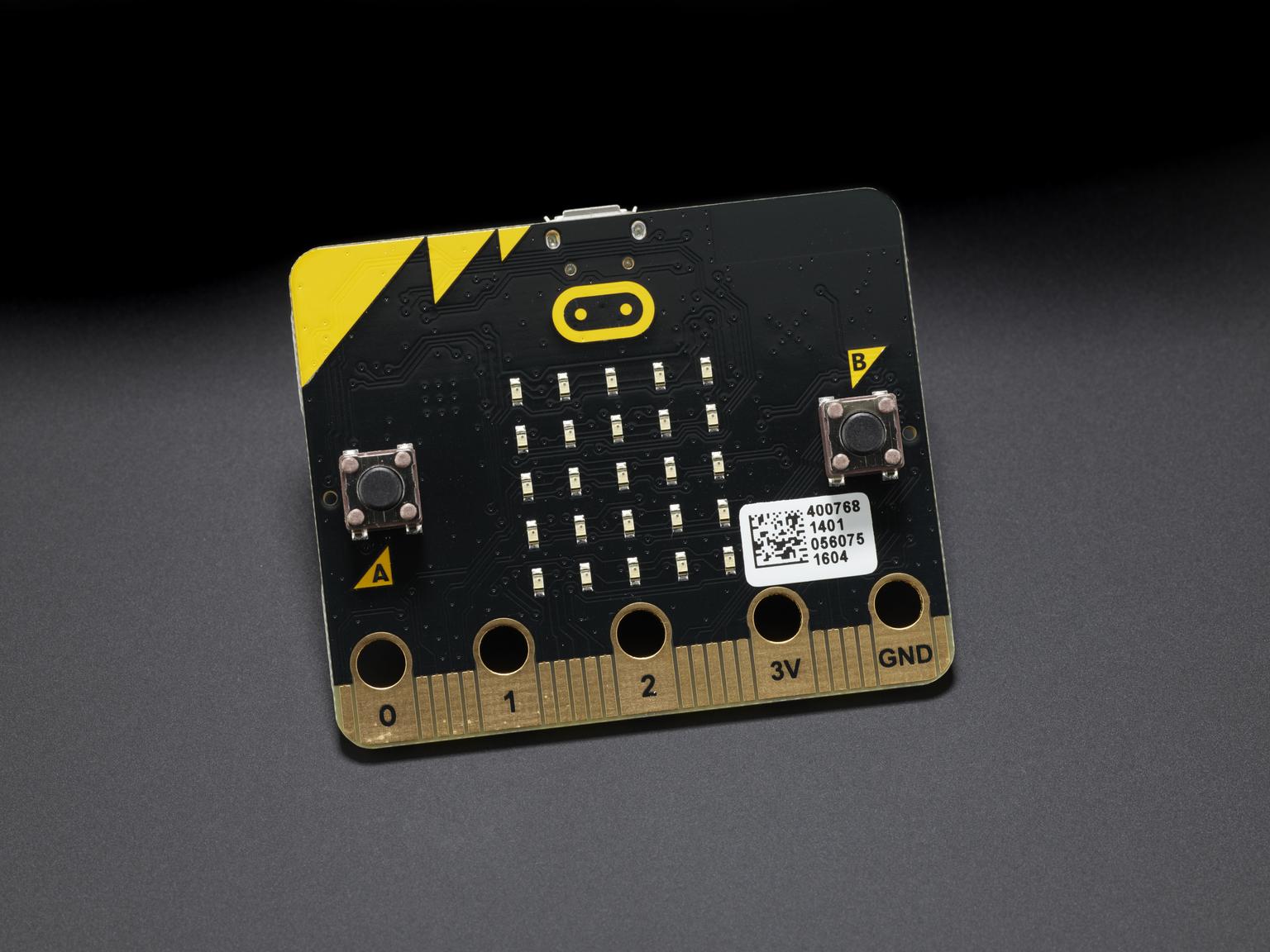
Prototype BBC Micro:bit (2012–2016)
Location: Revolution Manchester
The micro:bit is a pocket-sized codable computer that millions of children worldwide now use as an introduction to coding. It was developed by the BBC in Salford.
The BBC micro:bit aims to inspire every child to create their best digital future by providing them with a physical tool to explore digital coding. Users can launch rockets, control robots and create music, all with this tiny computer.
Greater Manchester has long been a pioneer of computer science. Alongside the micro:bit you’ll find the Manchester Small-Scale Experimental Machine, affectionately nicknamed Baby. It is a trailblazing machine that forever transformed the landscape of computing when, on 21 June 1948, it accomplished a radical feat by becoming the first electronic computer to store and run a program from memory. Developed and built at the University of Manchester, Baby’s pioneering technology proved the basic concept still used as the basis for billions of computers today.
Nearby in our Textiles Gallery, the Jacquard loom is another piece of iconic computing history that dates back even earlier than Baby. Designed in 1805, it is often considered a predecessor to the modern computer because it uses a binary system to store information that can be read by the loom and reproduced many times over.
Science Museum Group Collection © The Board of Trustees of the Science Museum
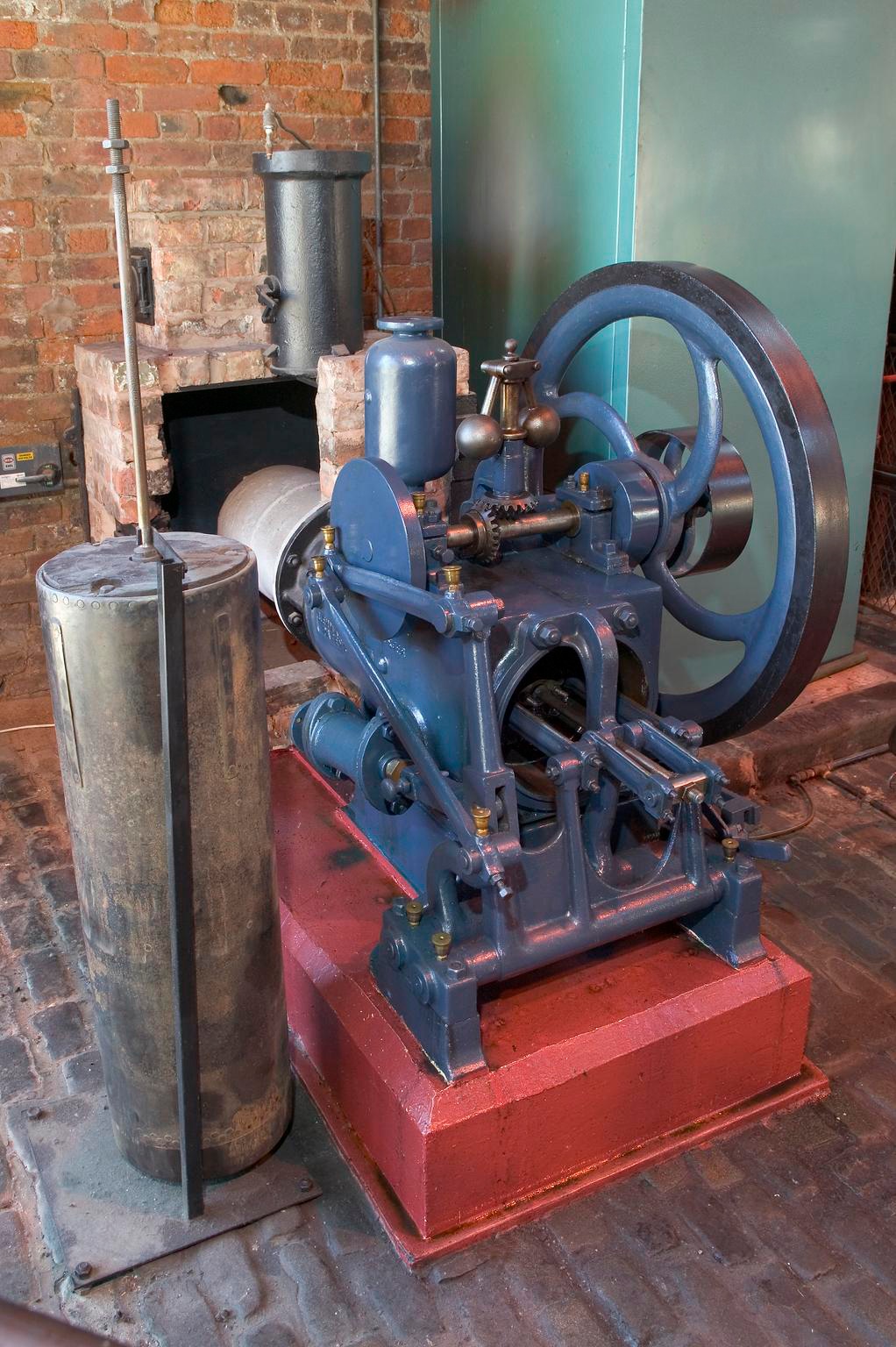
Bailey’s hot air engine made by W. H. Bailey & Co. Ltd, Worsley, Salford, 1880
Location: Power Hall: The Andrew Law Gallery
Small hot air engines like this were popular for use in sawmills (where logs are cut into timber) and on farms where they would drive light machinery.
Although low power, hot air engines were popular because they were simple to make and ran silently. Bailey’s engine used wood, coal, or any waste material as fuel. They were also safer to use than steam engines because they used hot air instead of scalding pressurised steam.
W H Bailey dates back to 1839, with the establishment of John Bailey’s clock-making business at Albion Works, Salford. The company was a respected Salford engineering firm that innovated throughout its long history during Salford’s industrial peak. It made essential equipment for Salford’s industries, first making clocks, later applying their skills to steam engines and hydraulic power, and eventually motorcar engines.

Science Museum Group Collection © The Board of Trustees of the Science Museum
Tony Wilson spotlight story and Granada ‘G’
Location: Revolution Manchester
Greater Manchester has long been on the map for its music and media scene. A major player in this was self-described ‘cultural catalyst’, Salford-born Tony Wilson.
In 1978, he co-founded independent record label, Factory Records, with Alan Erasmus. And launched the careers of some of the region’s most influential bands of the time.
Wilson started his career as a news reporter for Granada TV, which reported on news across the North West. The ‘G’ from Granada studio’s iconic signage, once just round the corner on Quay Street, is now on display in our Revolution Manchester gallery. A relic of a golden era of regional broadcasting.
Science Museum Group Collection © The Board of Trustees of the Science Museum
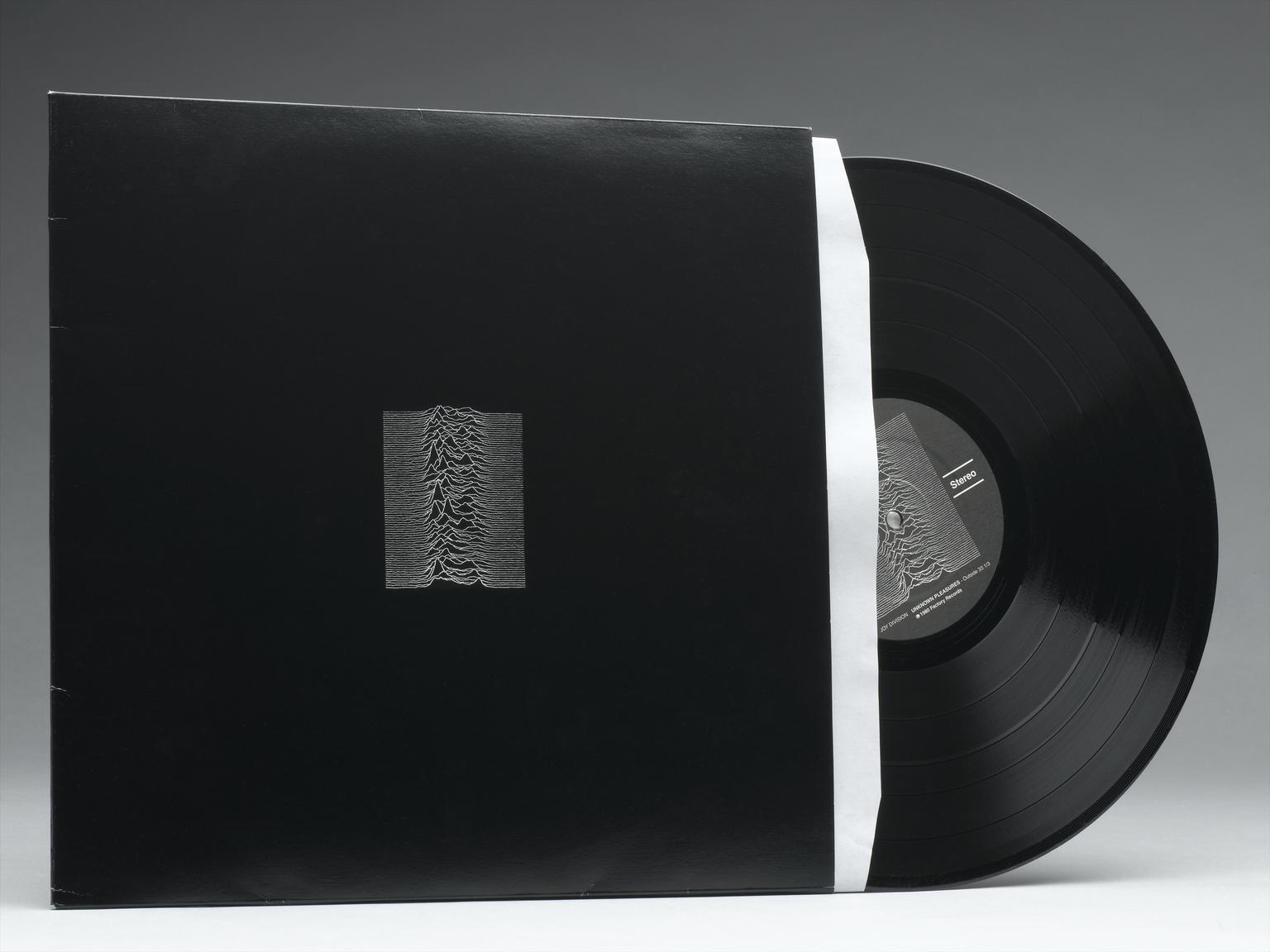
Unknown Pleasures LP
Location: Revolution Manchester
Joy Division were an English rock band formed in Salford in 1976. Unknown Pleasures was their first album released on Manchester’s Factory Records, co-founded by Salford-born Tony Wilson. It is now an iconic sound of that time.
Factory’s producer, Martin Hannett used innovative electronic music technologies in the recording studio to create the echoes and reverberations that shaped the record’s unique sound.
The cover to the Unknown Pleasures LP was designed by Factory Records co-founder and graphic designer, Peter Saville. It features a drawing of 100 consecutive pulses from the discovery of the first pulsar.
After the death of singer Ian Curtis in 1980, band members including Salford-born Peter Hook went on to form New Order, whose 1983 track, Blue Monday, became the best-selling 12-inch single of all time.
Sheila Bhati spotlight story and Dock10 photo
Location: Revolution Manchester Gallery
Salford’s story is one of reinvention. Salford Docks opened in 1894 on the Manchester Ship Canal. It was a major inland port until declining in the 1970s and eventually closing in 1982. After a period of redevelopment, it transformed into the area we now know as Salford Quays. This is home to MediaCity, a national media and creative hub inspired by its industrial predecessors.
Sheila Bhati, a software tester at the BBC, is part of this new chapter. She works in MediCity, to improve the experience of BBC listeners and champions women pursuing careers in technology.
MediaCity is home to cutting-edge broadcasting facilities. This includes Dock10, where a state-of-the-art virtual studio allows programme makers to create highly realistic virtual sets, bringing shows such as the BBC’s Match of the Day to life. You can see images of this process in action on the museum’s gallery.
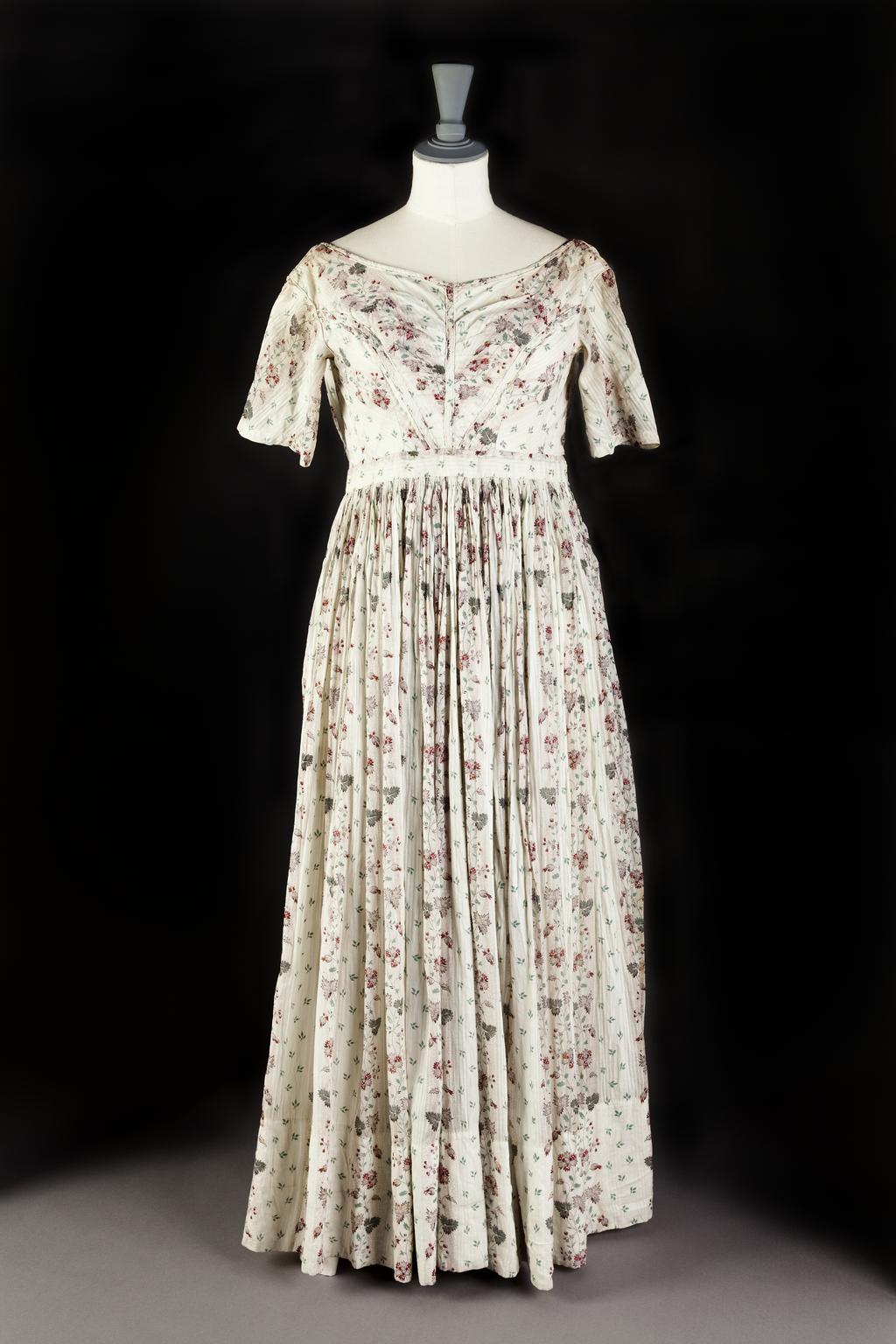
Salford Museum and Art Gallery
Self-striped printed muslin dress, around 1830
Location: Textiles Gallery
Textiles powered the rapid growth of Salford and Manchester during the Industrial Revolution. Advances in transport and mass production transformed the region into a global manufacturing centre.
This self-striped printed muslin dress is currently on loan from Salford Museum and Art Gallery. This dress is made from cloth woven and printed in Britain, but the floral patterns are imitations of Indian designs. It is frayed and stained from being worn again and again. Manufacturers in Manchester learned how to make cloth like the Indian cottons people craved. New machines made it possible to produce them in huge quantities.
Discover more about how Salford’s story connects to the Science and Industry Museum in this blog.