The museum’s Textiles Gallery paints a vivid picture of how cotton transformed Manchester into an urban metropolis and shaped lives here and around the world. Visitors can follow the textiles story through innovations in design, printing and finishing.
Whether you are into fabrics that pop with colour and pattern or you prefer more functional clothes to protect against Manchester’s weather, you’ll find eye-catching and surprising clothing-related stories in the space.
Specialist fabrics
Since the start of the Industrial Revolution, Manchester-based scientists have looked for ways to make textiles do more. Their efforts have given us fabrics that are cheaper, stronger, warmer, cooler, crease-resistant, stretchy and more waterproof, flame-retardant, colourful than ever before.
Now we use textiles in ways that Manchester’s early industrialists could never have imagined. Science continues to revolutionise the way we make and finish fabric.
Science Museum Group Collection © The Board of Trustees of the Science Museum
More information
Ever heard the saying ‘There’s no such thing as bad weather, only unsuitable clothing’? Today, clothes can be designed to make you feel great when you’re wearing them and to help you in even the most inhospitable conditions.
It’s hard to imagine living in Manchester without a waterproof coat. However, the first mass-produced waterproof fabric did not become available until after 1824, when chemist Charles Macintosh discovered a method for applying rubber to cotton. It wasn’t long before other companies were working on their own advances in textile manufacturing to allow people to function in extreme conditions.
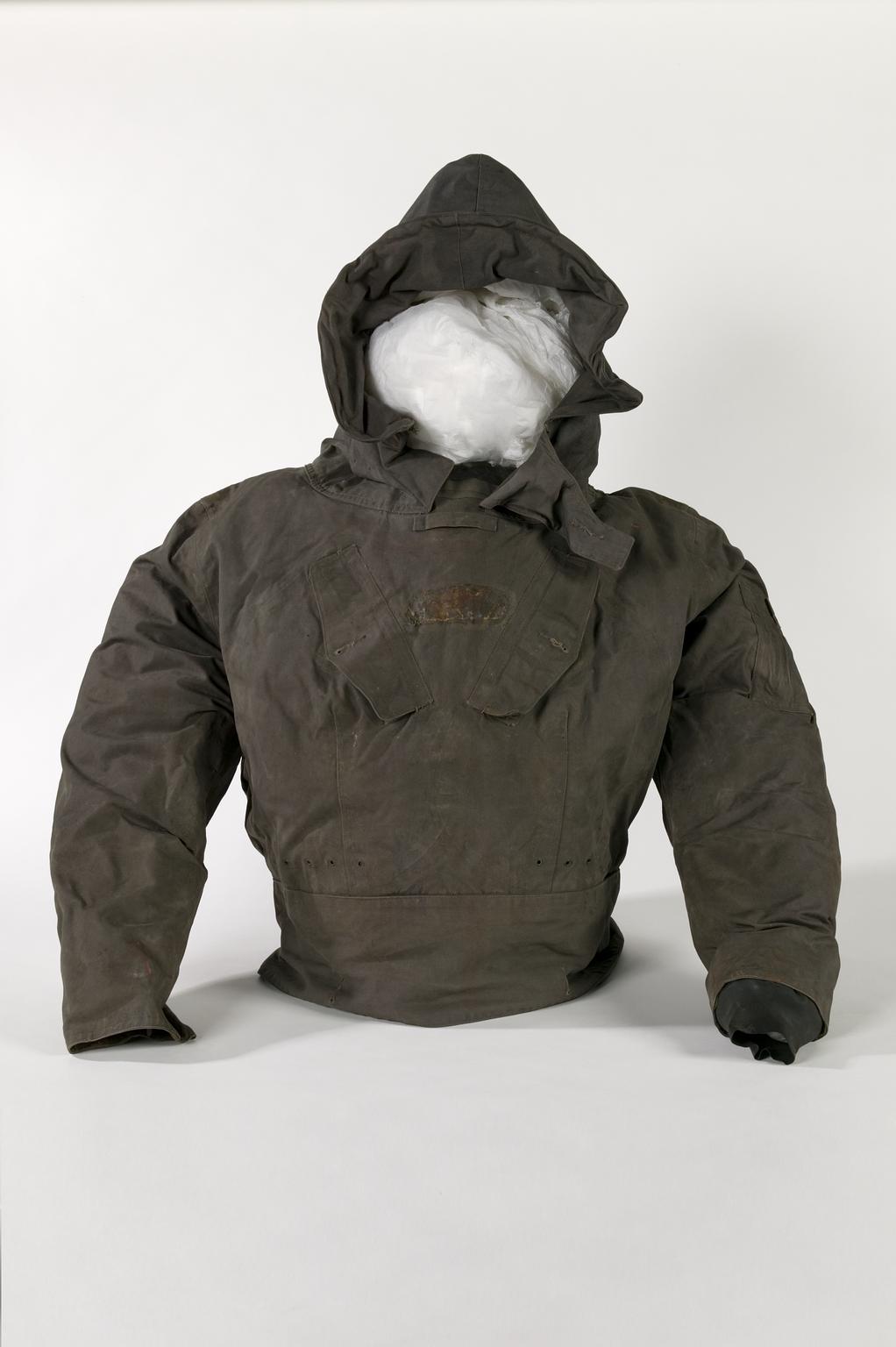
P. Frankenstein and Sons, founded in 1854 at the Victoria Rubber Works in Newton Heath, Manchester, started off specialising in rubberised fabrics. In the 1940s they began producing specialist survival clothing. Their range included full pressure suits, which were designed to help pilots survive when flying at high altitudes. In the event of cabin decompression, the suits could inflate and maintain steady pressure on the pilot’s body, helping them breathe without blacking out.
The company also manufactured immersion suits, like the one on display in the museum’s Textiles Gallery, which was designed to protect pilots in the event of a water landing. P. Frankenstein and Sons’ technology went on to inform the design of the Apollo spacesuits developed by NASA in the 1960s. Their suits even feature in the cult 1968 film 2001: A Space Odyssey. From the need to keep Mancunians dry to sending humans to the moon, Manchester’s textiles allow people to stay warm, dry and can even be lifesaving!
Innovations in dyeing
For thousands of years, and in cultures all over the world, people have been using plant and animal products to colour textiles. These dyes were expensive and did not last well. As Manchester’s textiles industry took hold in the early 1800s, the need for quality dyes that were consistent and stable became a subject of considerable commercial interest. In London in the 1850s, William Perkin discovered the first successful artificial dye, the purple colour ‘Mauveine’. This kick-started a new chemical industry producing brighter, cheaper and longer-lasting colouring products.
Without dyes, we wouldn’t see the full spectrum of colours in our wardrobes and around our homes that we see today. The bright colours you wear yourself, or see on catwalks around the world, could have originated in plant roots, shellfish, coal, or even urine.
Science Museum Group Collection © The Board of Trustees of the Science Museum
More information
Dr. Henry Edward Schunck (1820–1903), born in Manchester, the second son of a wealthy German textile merchant, undertook important research on natural dyestuffs. He studied in Berlin and Giessen, Germany, investigating lichens that produce violet dyes and the colouring properties of aloe plants. When he returned to England in 1846, he became Chemical Manager of the family cotton printing firm, Schunck, Souchay & Co.
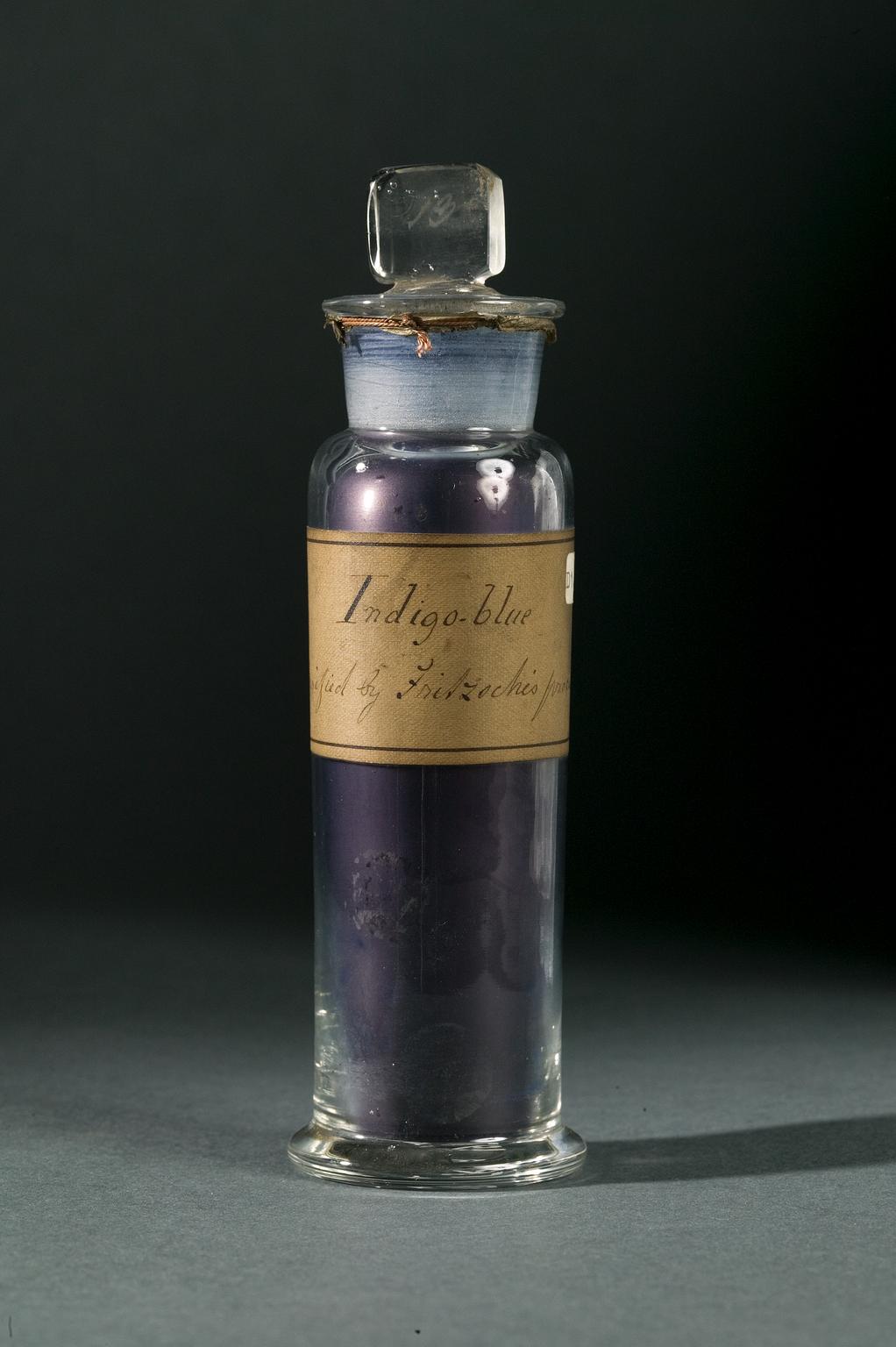
Schunck’s breakthrough was the isolation of the yellow dyestuff from the plant madder (Rubia tinctorum), known as alizarin. He invented a way of purifying alizarin for commercial use. In the 1850s, Schunck began investigating indigo blue, which he extracted from the woad plant (Isatis tinctoria). He also studied indigo in urine and a purple dye, derived from shellfish.
His experiments with natural dyes were used by the textile and emerging chemical industry. You can see, a display of dye samples from Schunck’s laboratory in the Textiles Gallery, including the chemicals and natural materials that he used in his research. These samples sit alongside other important dyes, such as those from Imperial Chemical Industries (ICI) who made dyes in Blackley, north Manchester, from 1926 and became a global leader in dye production.
Manchester’s original dyeing and bleaching industries regularly released their wastewater back into the city’s rivers, causing them to flow red, green and even purple. The textile industry today continues to use chemicals that are harmful to the environment. Up to 20% of global water pollution is attributed to the dyeing and treatment of textiles. Research continues to develop dyes that are non-toxic, biodegradable and durable, lessening their negative impact.
Patterns and designs
From florals to stripes, the pattern of your clothes can cheer you up, make you feel nostalgic, and even convey your emotions or social status. People around the world used the cloth made in Manchester’s mills to create clothes and furnishings of every description. Manchester’s textile manufacturers followed fashions in different countries carefully and found ways to mass-produce the patterns people wanted.
From the early 18th century, Manchester’s textile manufacturers sought inventive ways to meet the ever-growing demand for cotton cloth and yarn. From using painstakingly made wooden printing blocks to vast metal roller printing machines that could print up to 15 colours simultaneously and churn out huge volumes of consistent patterned cloth. However, the first printed cotton cloth available in Britain didn’t come out of the mills of Manchester, but from skilled workers in India.
Influential imports
Science Museum Group Collection © The Board of Trustees of the Science Museum
More information
Merchants first brought cotton cloth to Britain from India around 500 years ago. For people in Britain who were used to heavy woollen fabrics, cotton cloth was new and exciting. It was lightweight, could be washed and dried easily, and had the added advantage that it could be dyed or printed to create colourful, eye-catching clothing.
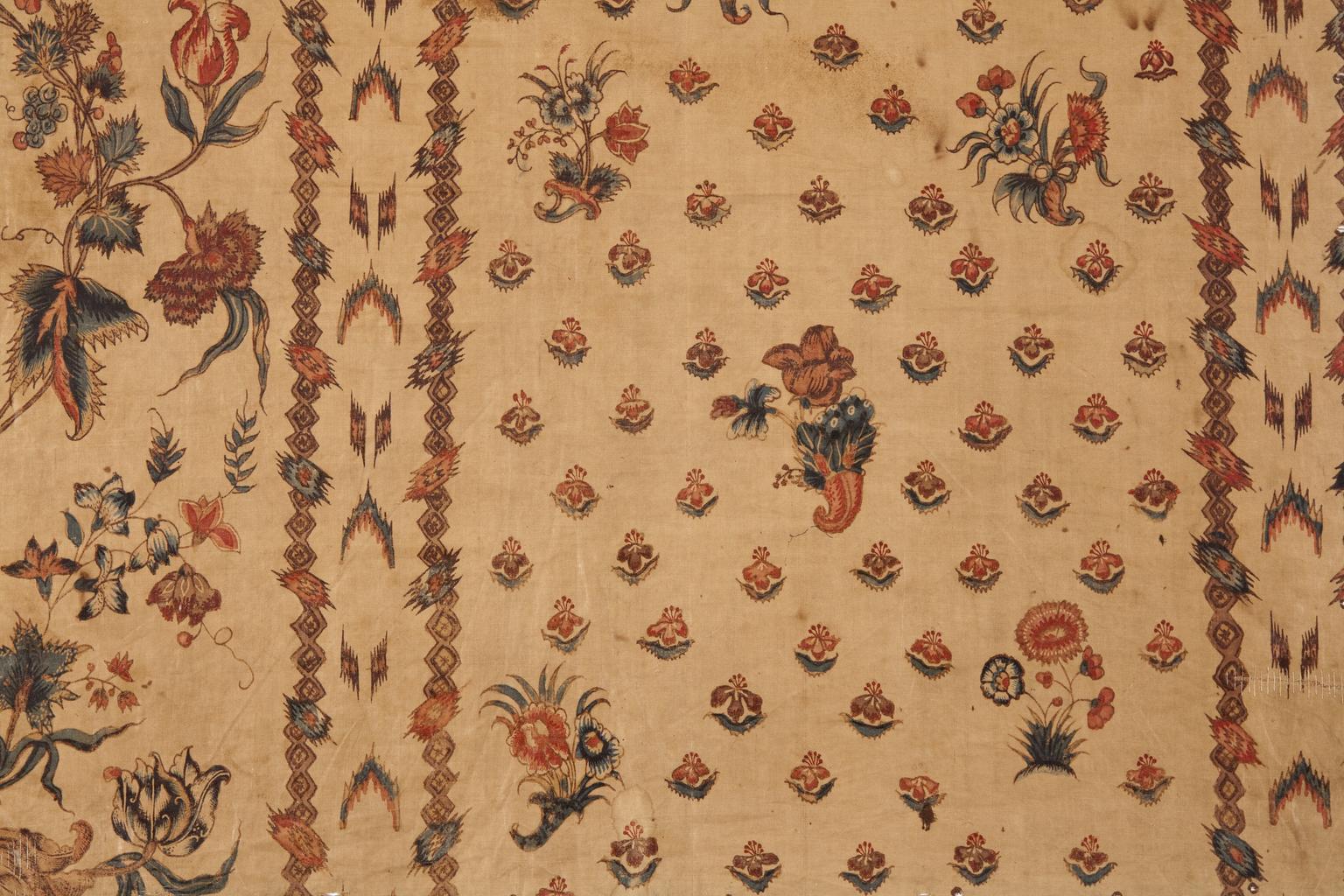
You can see an example of 18th century Indian made palampore cotton cloth, in the Textiles Gallery. Palampore was prized for its quality and elaborate designs, and it was fashionable to used it to make curtains and bedspreads. These early designs were often inspired by the beauty of nature, such as trees and flowers.
To meet the demands of Britain’s growing craze for cotton, entrepreneurs and engineers, such as Richard Arkwright, developed technology to process raw cotton and produce cloth faster and cheaper than ever before. Cotton spinning and weaving transferred quickly from a cottage industry to one of huge, noisy, coal powered mills filled with hundreds of workers.
By the 1780s, British traders had begun selling Manchester made cloth around the world. By dominating other countries, sometimes with violence, Britain controlled the trade of cotton across the globe. India’s skilled makers struggled to compete with Manchester’s mass-produced cotton goods and thousands lost their livelihoods.
Most of the cotton spun and woven in Manchester was grown by enslaved people on plantations in the Caribbean and in South America, including Guyana and Brazil. As demand for it increased, colonial plantation owners intensified their exploitation of land and enslaved people to supply raw cotton to textile manufacturers in Britain. We’re committed to ongoing research and partnership work to explore the connections between Manchester, cotton and transatlantic slavery. You can find out more about our forthcoming major exhibition, Global Threads and Cotton Connections projects, alongside where to find relevant displays in the museum, on our dedicated Manchester, Cotton and Slavery webpage.
Students to studios
Science Museum Group Collection © The Board of Trustees of the Science Museum
More information
The School of Art in Manchester, now part of Manchester Metropolitan University, was set up in 1838 and trained many of the skilled textile designers needed by the region’s cotton industry. Graduates would often go on to work with textile printing companies to produce designs that were sold around the world. Designs were painstakingly worked up at desks in studios around the city. Some companies sent people overseas to report on current fashions to help designers back in Manchester create styles that would sell.
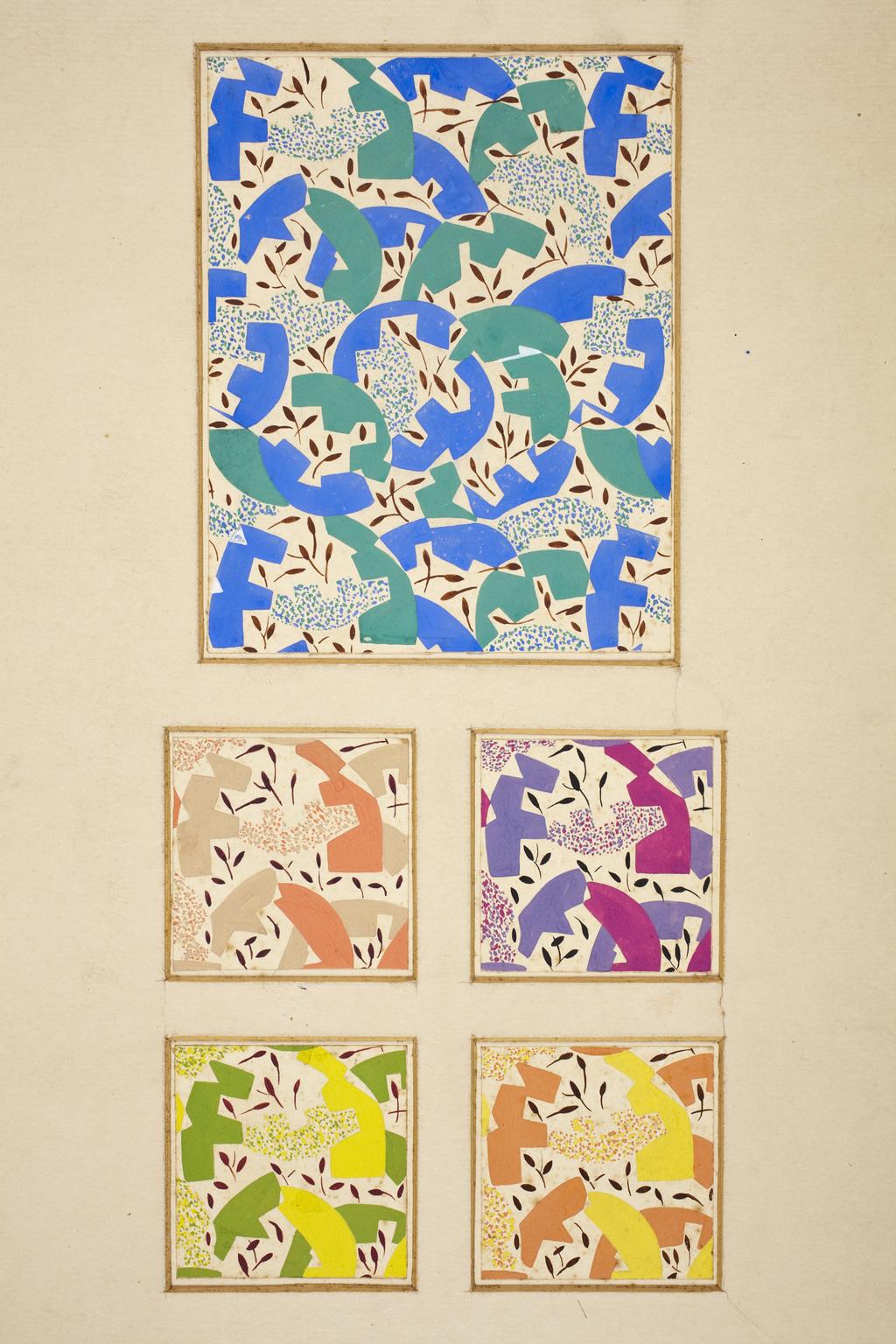
Textile printers created books of their designs. The books offered potential buyers the chance to see a small sample of the pattern, the different colourways it came in and its unique reference number. They also served as a record of the company’s catalogue, showcasing the range of the designer’s vision. Jean Elizabeth Gregson studied cotton print design at Manchester School of Art from 1929–33. In the Textiles Gallery, you can see some of her celebrated designs on display. As well as being skilled artists, textile designers needed to be meticulous in their pattern making for their work to be translated into repeatable motifs on the cloth.
Colourful connections
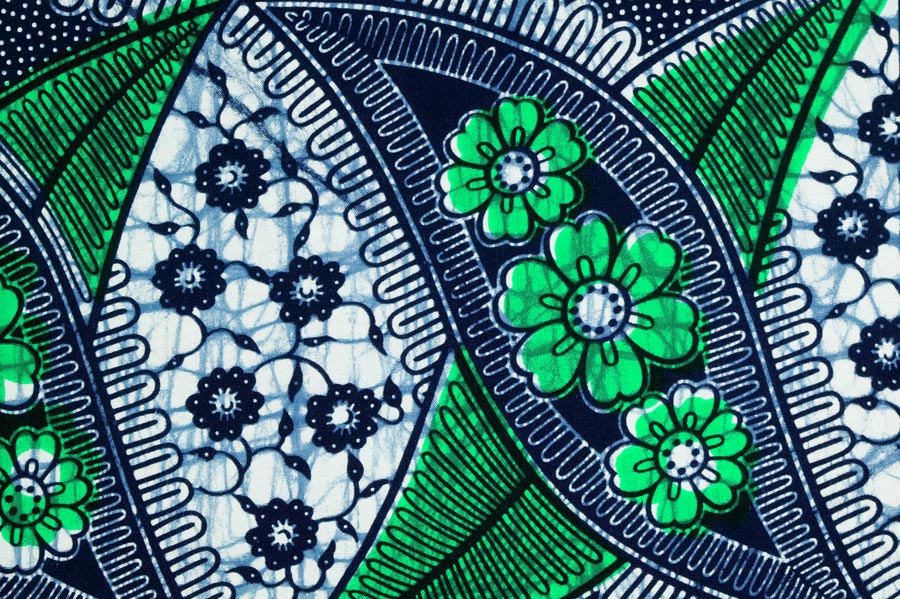
Science Museum Group Collection © The Board of Trustees of the Science Museum
More information
By the early 1900s, there was a growing trade in Manchester-produced cloth in West Africa. Specifically, a printed cotton fabric that became known as English wax, Dutch wax or African wax print and had locally derived names such as Ankara. It mimicked a popular and colourful Indonesian batik style. Designers in Manchester created bold patterns that would be worn by people thousands of miles away. Many of the designs featured animals that the Mancunian-based designers had never seen in person, such as lions, buffalo, snakes and eagles.
Designs and colourways often took on deeper meanings and were used as expressions of identity. They became associated with specific events, celebrations and well-known proverbs, varying across countries and regions. Patterns that included umbrellas, for example, might be taken as a symbol of status. Textile sellers would inform merchants which styles were in demand and suggest motifs that would sell well.
Manchester’s early textiles were printed by hand. Skilled textile workers applied designs to cloth one colour at a time using hand-carved printing blocks. Advances in technology meant block printing was largely replaced by transferring the pattern onto cloth by using rollers powered by machines.
In the Textiles Gallery you can see a selection of textiles designed for export to West Africa, made by ABC Wax, based in Newton Bank, Manchester. ABC Wax started making textiles like these at its factory in 1908. They sold them to customers in West Africa for almost 100 years before production moved to Ghana in 2007. At the peak of ABC Wax’s activity, new designs were launched at the rate of up to 200 per year.
Want to find out more about innovation in clothing and fashion? Our Textiles Gallery is open every day 10.00–17.00, and you can catch daily demonstrations of our historic textiles machinery. Why not combine it with a visit to Vogue: Inventing the Runway at Aviva Studios?
Learn more about the impact textiles had on Manchester in our Objects & Stories and read about our ongoing work exploring connections between Manchester, cotton and slavery.